


Social media has transformed the way people communicate, consume information, and interact with brands. Whether it is a global corporation, a local business, or an individual content creator, success in the digital world increasingly depends on understanding audience behavior and adapting to changing trends.
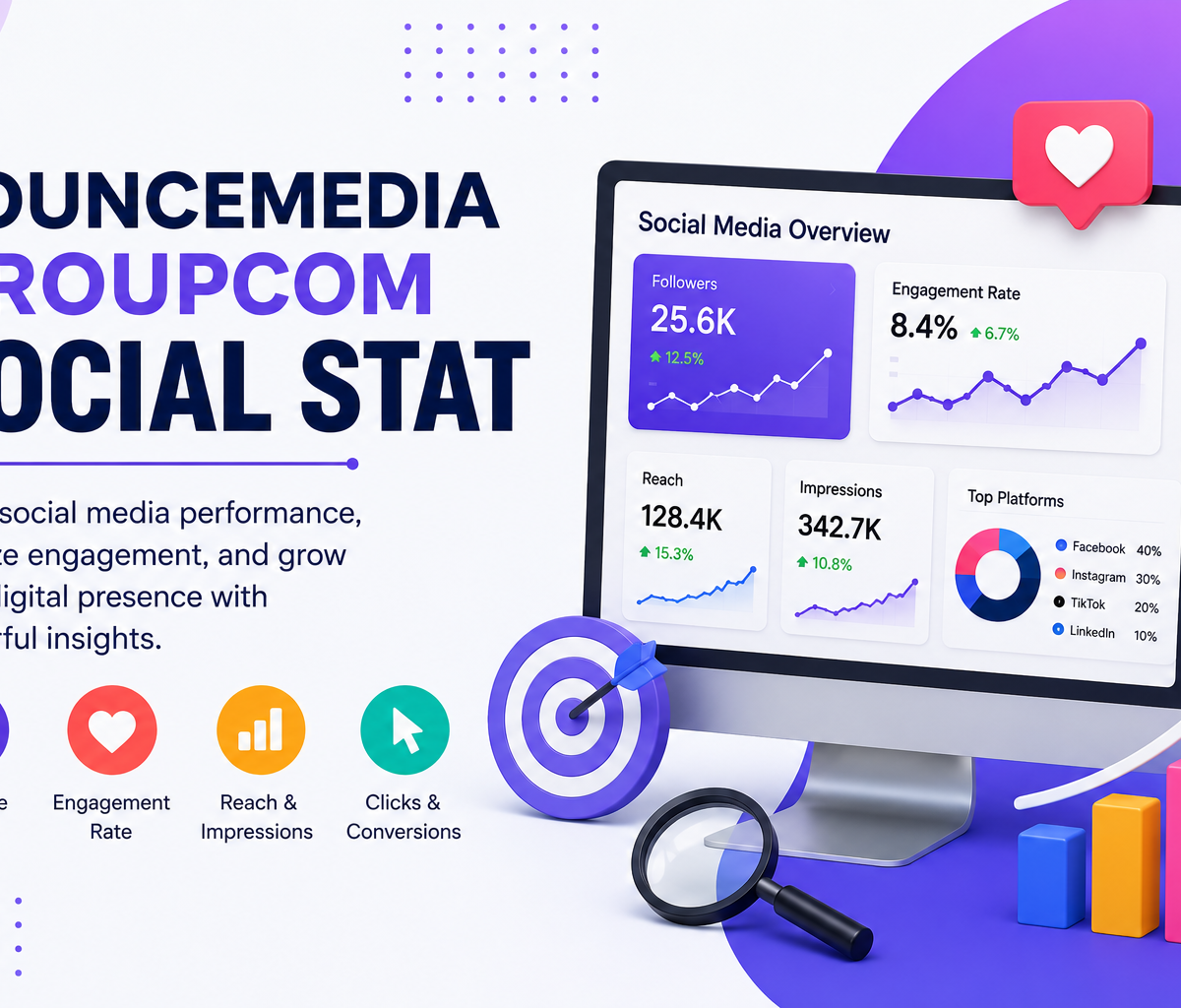
As social platforms continue to evolve, analytics have become a vital part of online strategy. This is where the topic of bouncemediagroupcom social stat becomes relevant. The term is often associated with evaluating social media performance, measuring engagement, and understanding the metrics that influence digital growth.
In a world where billions of social interactions occur every day, organizations need more than creativity to succeed. They need accurate data, meaningful insights, and a clear understanding of what drives audience engagement. Social statistics help provide that foundation.
The Rise of Data-Driven Social Media Marketing
In the early days of social media, brands primarily focused on gaining followers and increasing visibility. While these goals remain important, modern digital marketing requires a much deeper understanding of audience behavior.
Today, marketers analyze detailed performance data to determine whether their content is achieving desired results. Every click, reaction, comment, share, and view contributes to a larger picture of audience engagement.
The growing interest in bouncemediagroupcom social stat reflects a broader trend toward data-driven decision-making. Rather than relying on assumptions, organizations use measurable insights to improve content strategies and strengthen online performance.
Data has become one of the most valuable assets in digital marketing because it provides evidence rather than speculation.
What Social Statistics Actually Measure
Social statistics represent the measurable outcomes of user activity across social platforms.
These metrics allow businesses and media organizations to evaluate how audiences respond to their content. Instead of guessing what users like, analytics reveal real-world behavior patterns.
Some of the most commonly monitored statistics include engagement rates, reach, impressions, follower growth, video views, click-through rates, and content shares.
Each metric provides unique insights.
Reach shows how many people see content.
Engagement reveals how users interact with content.
Follower growth indicates audience expansion.
Click-through rates measure how effectively content encourages action.
Together, these indicators create a comprehensive view of social media performance.
This analytical approach is at the core of what people often seek when exploring bouncemediagroupcom social stat and related social media insights.
Why Engagement Matters More Than Follower Counts
Many people assume that social media success is determined by audience size. While followers are important, engagement often provides a more accurate measure of effectiveness.
A page with one million followers but little interaction may be less influential than a smaller community with highly engaged users.
Engagement demonstrates that audiences are paying attention. It reflects interest, trust, and relevance.
Comments suggest discussion.
Shares indicate value.
Saves often show long-term usefulness.
Likes and reactions reveal immediate responses.
Because engagement reflects genuine audience interaction, it has become one of the most important metrics in modern analytics.
Organizations examining bouncemediagroupcom social stat often focus heavily on engagement because it offers meaningful insights into content quality and audience connection.
The Impact of Social Analytics on Business Growth
Businesses increasingly view social media as more than a communication channel. It has become a critical component of customer acquisition, brand awareness, and revenue generation.
Analytics support business growth by identifying what works and what does not.
Successful campaigns can be replicated.
Weak-performing content can be improved.
Audience preferences become easier to understand.
Marketing budgets can be allocated more efficiently.
This strategic advantage allows organizations to maximize their return on investment while minimizing wasted effort.
Social analytics transform marketing from a trial-and-error process into a structured system guided by evidence and measurable outcomes.
Understanding Reach and Visibility
One of the primary goals of social media marketing is visibility.
If audiences never see content, engagement becomes impossible.
Reach measures the number of unique users who encounter a post. This metric helps organizations understand how effectively content is being distributed.
Several factors influence reach.
Platform algorithms play a major role.
Posting frequency affects visibility.
Audience engagement can increase content exposure.
Content quality often influences distribution.
By monitoring reach trends, marketers can identify opportunities to improve visibility and expand audience awareness.
The performance insights associated with bouncemediagroupcom social stat often emphasize the importance of balancing visibility with meaningful engagement.
How Audience Behavior Shapes Social Strategies
One of the greatest strengths of social media analytics is the ability to observe audience behavior in real time.
Marketers can identify when users are most active, what content they prefer, and how they interact with different formats.
For example, some audiences respond better to educational posts, while others prefer entertaining videos or visual storytelling.
Understanding these preferences allows organizations to tailor content more effectively.
Audience behavior data also supports personalization.
Instead of delivering the same message to everyone, brands can create targeted content that aligns with specific interests and demographics.
This personalized approach often leads to stronger engagement and improved performance.
Content Performance and Continuous Improvement
No content strategy is perfect from the beginning.
Successful organizations continuously test, evaluate, and improve their approaches.
Analytics make this process possible.
By reviewing performance data, marketers can identify patterns that would otherwise remain hidden.
Certain topics may consistently attract attention.
Specific content formats may outperform others.
Particular posting times may generate higher engagement.
These insights help refine future content strategies.
The analytical mindset associated with bouncemediagroupcom social stat supports continuous improvement by encouraging evidence-based decision-making rather than guesswork.
Challenges in Social Media Measurement
Although analytics provide valuable information, interpreting data correctly requires experience and context.
One common mistake is focusing too heavily on vanity metrics.
Large follower counts or high view numbers may appear impressive, but they do not always translate into meaningful outcomes.
Another challenge involves platform differences.
Metrics may vary significantly across Facebook, Instagram, LinkedIn, TikTok, and other networks.
What constitutes strong performance on one platform may be average on another.
Algorithm updates also create complexity. Changes in content distribution can influence performance without reflecting content quality.
For these reasons, effective analysis requires a comprehensive view rather than reliance on a single metric.
The Role of Artificial Intelligence in Social Analytics
Artificial intelligence is becoming increasingly important in digital marketing and analytics.
Modern analytical tools can process vast amounts of information far more efficiently than manual methods.
AI can identify trends, predict audience behavior, and uncover opportunities that might otherwise go unnoticed.
Some systems can even recommend optimal posting times, content formats, and audience targeting strategies.
As technology continues to advance, AI-powered analytics will likely become standard across the industry.
This evolution will make social insights more accessible and actionable for businesses of all sizes.
The future of bouncemediagroupcom social stat will likely involve increasingly sophisticated technologies capable of delivering deeper and more predictive insights.
Building Long-Term Success Through Analytics
Sustainable social media success requires more than occasional viral content.
Long-term growth depends on consistency, audience understanding, and strategic adaptation.
Analytics provide the information necessary to support these objectives.
Organizations that regularly monitor performance can identify emerging trends before competitors.
They can respond more effectively to audience needs.
They can improve content quality and maximize marketing efficiency.
Most importantly, they can make decisions based on evidence rather than assumptions.
This approach creates a foundation for continuous growth and stronger audience relationships.
The Future of Social Media Performance Measurement
The future of social analytics extends beyond tracking basic engagement metrics.
Organizations increasingly want deeper insights into customer sentiment, loyalty, and long-term value.
Future measurement systems will likely integrate social media data with broader business performance indicators.
This integration will help companies understand how social activity contributes to customer retention, brand perception, and revenue growth.
Predictive analytics may also become more common, allowing organizations to anticipate future trends rather than simply analyzing past performance.
As digital competition increases, advanced measurement capabilities will become an even more important competitive advantage.
Conclusion
Social media has become one of the most influential communication channels in the modern world. Success on these platforms requires more than creativity and consistency. It requires a clear understanding of audience behavior and performance data.
The growing interest in bouncemediagroupcom social stat highlights the importance of analytics in evaluating social media effectiveness. Through metrics such as reach, engagement, impressions, follower growth, and audience insights, organizations can make informed decisions that support long-term success.
Social statistics provide the knowledge needed to improve content strategies, strengthen audience relationships, and maximize digital marketing results. As technology continues to evolve, data-driven approaches will remain essential for businesses, media organizations, and creators seeking sustainable growth in an increasingly competitive online environment.